2026 Best 304 Stainless Steel Angle for Global Buyers
Choosing the right 304 Stainless Steel Angle is a specification decision, not merely a price comparison. Global buyers must examine corrosion resistance, dimensional accuracy, surface finish, and traceability.
The World Stainless Association reported global stainless steel production at approximately 58.4 million tonnes in 2023. Its Stainless Steel in Figures report also confirms stainless steel’s continuing importance across construction, food processing, transport, and industrial equipment. The International Stainless Steel Forum highlights recycling as a major strength, because stainless steel can return to production without losing its essential properties. That matters for projects requiring long service life and responsible material sourcing.
Tim Collins, former Secretary General of worldstainless, described stainless steel as “a material for the future.” His observation fits 304 Stainless Steel Angle, especially where moisture, cleaning chemicals, and daily handling create demanding conditions. The alloy typically contains about 18% chromium and 8% nickel, supporting its familiar balance of formability, weldability, and corrosion resistance. Still, 304 is not universal. Chloride-rich coastal environments may require 316 stainless steel instead.
This guide compares grades, standards, sizes, finishes, manufacturing routes, and supplier documentation. It considers ASTM, EN, and other widely used specifications. Buyers should request mill test certificates, heat numbers, tolerance data, and independent inspection when project risk is high. A polished surface can look impressive. It cannot correct incorrect chemistry or poor fabrication.
The uncomfortable truth is simple: the lowest quotation may become the most expensive choice.eriwa
What Is 304 Stainless Steel Angle?
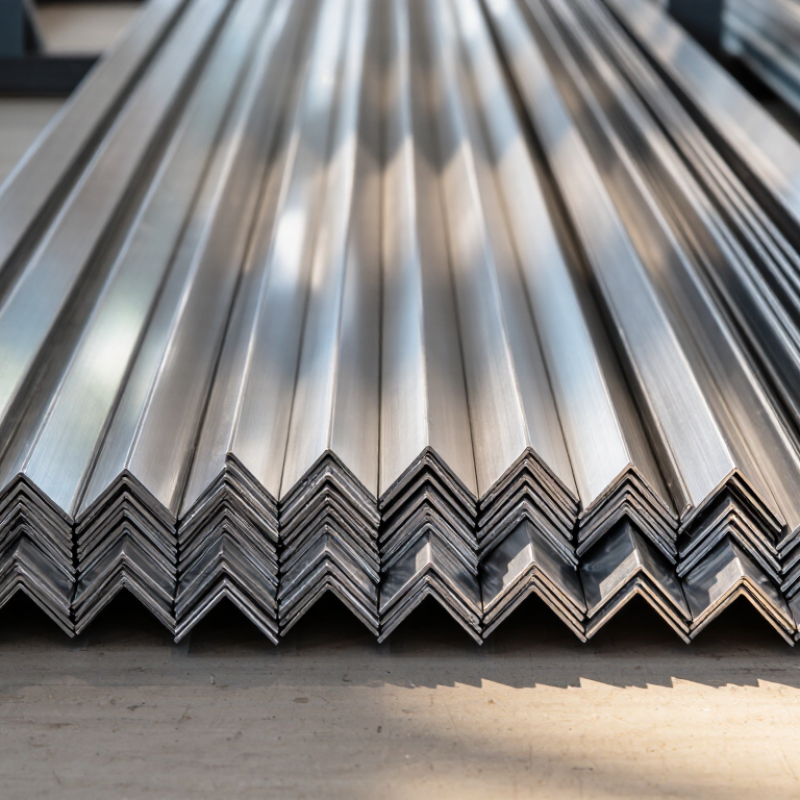
304 stainless steel angle is an L-shaped structural profile made from austenitic stainless steel. It usually contains about 18% chromium and 8% nickel. These elements help create a passive surface that resists rust in many indoor and outdoor environments.
The angle may have equal or unequal legs. Common uses include equipment frames, brackets, shelving, architectural trim, and food-processing supports. It offers good weldability, formability, and impact resistance. However, it is not stainless forever. Salt spray, chemicals, poor drainage, and iron contamination can still cause staining. In practical purchasing work, I have seen incorrect thicknesses create more trouble than expected. A profile can look suitable but fail after cutting or welding.
Tips: Check the leg size, thickness, length, surface finish, and edge condition. Ask for a material certificate and confirm the applicable standard, such as ASTM A276 or an equivalent specification. For coastal or chemical service, review the environment carefully; 304 may not be enough. Also inspect straightness and dimensional tolerances before fabrication. This small step prevents costly rework. Even experienced buyers sometimes focus on price first, which can be a mistake.
2026 Best 304 Stainless Steel Angle for Global Buyers – What Is 304 Stainless Steel Angle?
304 stainless steel angle is an L-shaped structural profile containing approximately 18–20% chromium and 8–10.5% nickel. The chart shows the estimated theoretical mass per metre for commonly specified equal-leg angle sizes. Values are calculated using a typical 304 stainless steel density of 8,000 kg/m³ and the cross-sectional area formula: 2 × leg width × thickness − thickness². Actual weights may vary slightly according to manufacturing tolerances and surface finish.
How to Select 304 Stainless Steel Angle for Global Projects
2026 Best 304 Stainless Steel Angle for Global Buyers
How to Select 304 Stainless Steel Angle for Global Projects
Selecting 304 stainless steel angle starts with the project environment, not the lowest quotation. The International Stainless Steel Forum reported global crude stainless steel production of about 58.4 million tonnes in 2023. That scale supports broad availability, but availability does not guarantee correct quality. For coastal structures, food-processing frames, and indoor equipment, assess chloride exposure, cleaning chemicals, humidity, and temperature. 304 offers useful corrosion resistance, yet it can suffer tea staining or pitting in salt-rich conditions.
Confirm the material standard before discussing price. ASTM A276, ASTM A484, and EN 10088 cover different product and inspection requirements. EN 10056 helps verify equal and unequal angle dimensions. Request a heat number, chemical analysis, mechanical test results, and a 3.1 inspection certificate when project control requires traceability. Check the actual chromium and nickel ranges against the ordered grade. Check the paperwork.
Dimensions need practical verification. Measure leg length, thickness, straightness, and corner radius at several points, especially on long sections. A 6-metre angle may look accurate at one end and drift near the bundle center. Surface finish also affects fabrication and appearance; brushed, pickled, and mill finishes are not interchangeable. Use positive material identification for critical assemblies. I would not rely on a certificate alone. Transport damage, mixed bundles, and unclear markings remain common procurement risks, and my own first specification would be revised after reviewing the site’s drainage and welding details.
Applications, Pricing, and International Purchasing Considerations
For global buyers, 304 stainless steel angle remains a practical choice for indoor structures, food-processing frames, equipment supports, and architectural trim. Its chromium-nickel composition offers good corrosion resistance and easy fabrication. It also performs well during cutting, drilling, and welding. However, it is not the best option for every marine or chloride-rich environment. Pitting can still occur.
Pricing in 2026 depends on thickness, leg dimensions, surface finish, order volume, and nickel market movement. Freight costs and currency changes add uncertainty. A thin, mill-finish angle may cost far less than a polished product. Ask for pricing under clear Incoterms. Otherwise, comparisons become misleading. A low quote can look attractive. It may exclude packing, inspection, or inland delivery.
International purchasing requires more than checking a unit price. Request a material test certificate, chemical composition, mechanical properties, dimensional tolerances, and production photos. Confirm whether the angle is equal or unequal. This small detail causes frequent ordering errors. Specify the required standard, length tolerance, surface condition, and protective packaging. Wooden cases may need treatment documents for certain destinations. Independent inspection can verify grade and dimensions before shipment. It adds cost, but rejected cargo costs more. Payment terms, lead time, customs classification, and insurance should be written into the purchase contract. Some buyers still rely on verbal promises. That is risky. Keep every technical detail in one approved document.