2026 Top Hydraulic Pump Types for Global Buyers
Choosing the right hydraulic pump can determine a machine’s efficiency, service life, and operating cost. For global buyers, the decision involves more than pressure and flow ratings. Fluid viscosity, ambient temperature, contamination levels, noise limits, duty cycles, and local service support also matter.
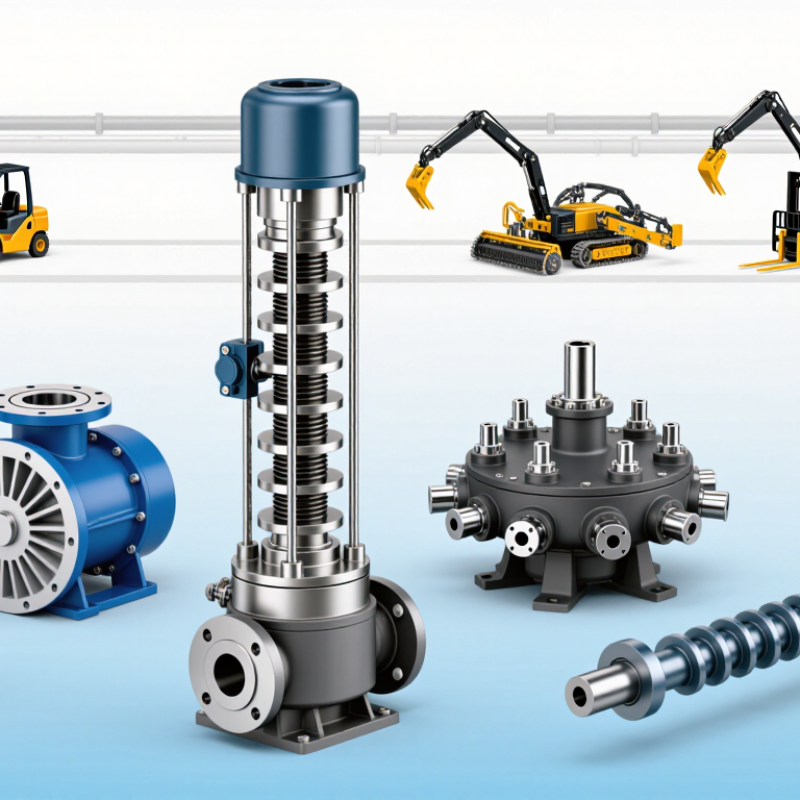
Dr. Michael Ivantysyn, a respected hydraulic machinery author and educator, offers a useful principle: “Pump selection must be considered within the complete hydraulic system.” That perspective shapes this guide to the 2026 Top Hydraulic Pump Types for Global Buyers. Hyd Pumps are not interchangeable components. A compact gear pump may suit a forklift or agricultural attachment, while a vane pump can provide quieter operation in industrial equipment. Axial piston pumps support demanding high-pressure systems, but they require cleaner oil and more careful maintenance. Radial piston pumps deliver strong pressure performance, although their size and cost may challenge compact designs. Screw pumps remain valuable where smooth flow and low pulsation are priorities.
Real purchasing decisions often begin with a noisy test bench, a hot oil reservoir, or an unexpected pressure drop. Small details become expensive quickly. A pump that appears efficient on paper may perform poorly with cold fluid or poor filtration. A neat ranking would be convenient. It would also be wrong. Buyers should compare verified performance curves, warranty terms, replacement availability, and technical documentation. Some manufacturers provide impressive numbers but limited field support. That weakness deserves attention. This overview examines major Hyd Pumps types through practical performance, application fit, maintenance needs, and long-term reliability.
Hydraulic Pump Fundamentals: Displacement, Pressure, Flow, and Efficiency Metrics
2026 Top Hydraulic Pump Types for Global Buyers
Hydraulic pump selection begins with displacement, pressure, flow, and efficiency. Displacement is the fluid volume moved per shaft revolution. A fixed-displacement gear pump delivers a predictable volume, while a variable piston pump adjusts output as demand changes. Vane pumps sit between these choices, offering smooth flow and moderate operating complexity. Measure twice.
Pressure describes the resistance the pump can overcome, not the flow it produces. A pump rated for 250 bar may require lower continuous pressure for longer service life. Flow depends on displacement and rotational speed, but internal leakage reduces the actual output. For example, a pump may theoretically deliver 40 L/min yet provide only 36 L/min under load. Field measurements matter.
Efficiency has several layers. Volumetric efficiency compares actual flow with theoretical flow. Mechanical efficiency reflects friction and torque losses. Overall efficiency combines both and directly affects heat generation and energy use. In practical testing, I check pressure, flow, oil temperature, and input speed together. One reading can mislead. Poorly sized hoses, contaminated fluid, or cold oil may distort results. A common mistake is choosing maximum pressure first, then discovering inadequate flow at working speed. Buyers should compare rated values with continuous operating conditions, duty cycles, and maintenance access. Real systems are rarely perfect, and published figures sometimes need cautious verification.
External Gear Pumps: 80–250 bar Operating Pressure and 85–95% Efficiency
External gear pumps remain a practical choice for global hydraulic equipment buyers. Their simple construction supports stable output, easy servicing, and competitive pricing. Typical models operate between 80 and 250 bar, while volumetric efficiency often reaches 85–95% under rated conditions. Actual results depend on oil viscosity, temperature, clearance, and speed.
The U.S. Department of Energy’s pumping-system guidance stresses that total efficiency includes the pump, motor, controls, and pipework. A pump can show 95% volumetric efficiency yet waste energy through pressure losses elsewhere. ISO 4409:2019 also defines methods for measuring displacement, flow, pressure, and efficiency. These details matter during supplier comparisons. Pressure ratings are not universal. A 250-bar peak rating should not be treated as continuous operation. That mistake can shorten service life.
Tips:
Check continuous and peak pressure separately. Request test data at your working speed and oil temperature. Confirm cleanliness requirements using ISO 4406 codes. For dusty sites, improve filtration before increasing pump size. Keep a small margin, but avoid excessive oversizing. It raises energy use.
Field experience shows that external gear pumps tolerate demanding cycles well, but they are not silent. Noise can rise with high speed, poor inlet conditions, or aerated oil. Some buyers focus too heavily on headline efficiency. That is understandable, but incomplete. Seal quality, shaft loading, and cold-start behavior deserve equal attention. One overlooked detail can become the expensive one.
Vane Pumps: 70–210 bar Pressure Ratings and 85–93% Efficiency
Vane pumps remain a practical choice for many industrial hydraulic systems. Their typical pressure ratings range from 70 to 210 bar. This range suits mobile equipment, factory machinery, and moderate-duty power units. A 70 bar model may deliver smooth flow with lower component stress. At 210 bar, careful sizing and cooling become more important.
Efficiency commonly reaches 85–93%, depending on speed, fluid condition, pressure, and temperature. In field checks, actual efficiency can fall below catalog figures. That is not unusual. Worn vanes, contaminated oil, and poor inlet conditions create measurable losses. I always compare rated pressure with the system’s continuous working pressure, not only its peak value. A clean datasheet cannot show every installation problem. This is where selection sometimes needs a second review.
Tips: Confirm continuous pressure, flow demand, operating speed, and oil viscosity before purchasing. Leave a sensible safety margin below the maximum rating. Inspect filters and suction lines regularly. Listen for unusual noise, especially during cold starts. Small errors matter. Record pressure and temperature during commissioning, then reassess the pump after several weeks. A pump that performs well on day one may need adjustment when heat, dust, or changing workloads appear.
Vane pumps commonly operate across pressure ratings of approximately 70–210 bar, with typical overall efficiency ranging from 85% to 93%. Actual performance depends on pump design, fluid viscosity, speed, temperature, and operating conditions.
Axial Piston Pumps: 250–450 bar Pressure and 90–98% Efficiency
Axial piston pumps remain a strong choice for demanding mobile and industrial systems. Their typical working range reaches 250–450 bar, while well-designed units can achieve 90–98% total efficiency under rated conditions. The Hydraulic Equipment Market Report by MarketsandMarkets identifies energy efficiency as a major purchasing factor through 2028. That trend is practical, not merely commercial. At 350 bar, a small efficiency loss can become significant heat inside the hydraulic circuit. ISO 4409:2019 also highlights the need to verify displacement, flow, and efficiency under controlled test conditions.
In field applications, performance changes with oil temperature, contamination, speed, and pressure cycling. A pump rated at 98% efficiency may operate closer to 90–94% in a dusty construction environment. That difference affects cooling capacity and operating costs. Technical reports from the National Fluid Power Association repeatedly stress correct sizing and maintenance as key efficiency drivers. Catalog figures are useful, but they are not the entire story. Real systems are less tidy.
Tips: Match displacement to the duty cycle, not only peak pressure. Check case-drain flow during commissioning. Rising leakage often appears before a serious failure. Use clean fluid meeting the supplier’s specified viscosity range. Recheck efficiency after temperature stabilizes. A pressure setting near the upper limit may improve output briefly, but it can shorten service life and increase noise.
2026 Top Hydraulic Pump Types for Global Buyers - Axial Piston Pumps: 250–450 bar Pressure and 90–98% Efficiency
| Axial Piston Pump Type |
Typical Circuit |
Common Displacement Range |
Rated Pressure Range |
Peak Total Efficiency |
Typical Speed Range |
Control Options |
Recommended Applications |
Key Buyer Considerations |
| Variable-Displacement Swash-Plate Pump |
Open circuit |
10–1000 cm³/rev |
250–350 bar |
90–96% |
500–3000 rpm |
Pressure compensator, load sensing, power control, electronic proportional control |
Mobile construction equipment, agricultural machinery, injection-molding systems and industrial power units |
Offers strong variable-flow control and good energy efficiency; confirm inlet conditions, case-drain pressure and continuous-duty rating. |
| Variable-Displacement Bent-Axis Pump |
Open or closed circuit |
28–1000 cm³/rev |
300–450 bar |
92–98% |
500–2500 rpm |
Electric displacement control, hydraulic control, pressure control and proportional control |
High-pressure mobile drives, winches, forestry equipment, drilling machinery and hydrostatic transmissions |
Typically provides high starting torque and favorable mechanical efficiency; installation requires careful alignment and adequate shaft support. |
| Closed-Circuit Swash-Plate Pump |
Closed circuit |
45–1000 cm³/rev |
300–450 bar |
90–96% |
1800–3000 rpm |
Electric displacement control, hydraulic servo control and pressure override |
Wheel loaders, compactors, excavators, mobile machinery and hydrostatic vehicle drives |
Designed for bidirectional flow and dynamic speed control; a charge pump and flushing circuit are commonly required. |
| Fixed-Displacement Axial Piston Pump |
Open circuit |
10–250 cm³/rev |
250–350 bar |
90–94% |
800–3000 rpm |
Fixed flow; system-level pressure and flow control |
Constant-flow industrial equipment, lubrication systems, auxiliary circuits and simple hydraulic power packs |
Lower control complexity and predictable output; flow varies directly with shaft speed and is not automatically matched to demand. |
| High-Pressure Industrial Axial Piston Pump |
Open circuit |
25–500 cm³/rev |
350–450 bar |
93–98% |
600–2200 rpm |
Load sensing, pressure compensation, electro-proportional control and fieldbus control |
Presses, metal-forming machines, test benches, injection molding and centralized industrial hydraulic systems |
Suitable for continuous high-pressure operation when cooling, filtration, oil cleanliness and noise limits are properly managed. |
|
Technical note: The pressure and efficiency figures are representative engineering ranges for modern axial piston pump designs, not universal limits for every model. Peak total efficiency depends on displacement, speed, pressure, oil viscosity, temperature, control setting and installation quality. For final selection, verify the manufacturer’s continuous pressure, intermittent pressure, maximum speed, required flow, fluid compatibility and ISO cleanliness recommendations.
|
Radial Piston Pumps: Up to 700 bar for High-Pressure Applications
Radial piston pumps are built for demanding hydraulic work, with pressure ratings reaching up to 700 bar in suitable configurations. Their pistons sit radially around an eccentric cam, creating steady oil flow at high pressure. This design suits hydraulic presses, clamping systems, injection equipment, and laboratory test rigs.
Pressure is only one selection factor. Flow demand, operating speed, oil viscosity, and duty cycle must match the pump’s specifications. A pump rated at 700 bar should not run continuously at its maximum limit without thermal analysis. Heat can reduce seal life and increase internal leakage. Clean hydraulic oil matters greatly. Fine contamination may damage piston surfaces, valves, and precision bores.
Filtration deserves attention.
During equipment checks, technicians should record pressure peaks, oil temperature, noise, and response time. A pressure gauge near the actuator can reveal losses hidden at the pump outlet. Relief valve settings also need verification, because incorrect adjustment may overload the circuit. Radial piston pumps usually offer strong efficiency and long service life, but they are not automatically maintenance-free. Poor alignment, unsuitable oil, or frequent pressure shocks can shorten service life.
One practical weakness is their higher cost compared with simpler pump designs. They may also require careful installation and slower troubleshooting. This is easy to underestimate.
For global buyers, confirming test conditions behind the 700 bar rating is essential. Ask about continuous pressure, peak pressure, rated flow, temperature limits, filtration requirements, and available service documentation.