

2026 Top Unionwell Sealed Switch Suppliers Worldwide?
As industrial equipment becomes smarter, switch reliability remains a practical concern. This guide examines the 2026 top Unionwell sealed switch suppliers worldwide. It focuses on manufacturers serving automation, automotive, appliances, control panels, and outdoor equipment. These applications often face dust, moisture, vibration, and repeated mechanical stress.
A sealed switch is more than a protected housing. Contact stability, operating force, sealing design, material selection, and lifecycle testing all affect field performance. Supplier support matters too. Engineers need drawings, samples, certifications, customization options, and consistent production communication. Unionwell sealed switch products are often evaluated for their compact construction and suitability for demanding environments. However, no supplier should be judged by marketing claims alone. Test data matters. Application fit matters more.
Michael Chen, an industrial switch specialist with experience in sealed control components, explains, “A sealed switch earns trust when its protection, electrical performance, and mechanical life remain consistent after installation.” That principle shapes this supplier review. It encourages readers to compare ingress protection, terminal quality, switching capacity, temperature range, and validation methods. Pricing is included, but it should not dominate the decision.
Some conclusions may remain imperfect. Supplier capabilities can change. Regional service quality can differ. Public technical information may also be incomplete. Therefore, buyers should request current datasheets, production samples, and verification records before approving a design. Real conditions are rarely clean. Water spray, metal dust, cold starts, and rushed maintenance can expose weaknesses that laboratory summaries overlook. This overview offers a practical starting point, not a substitute for application testing.
What Are Unionwell Sealed Switches and How Do They Work?
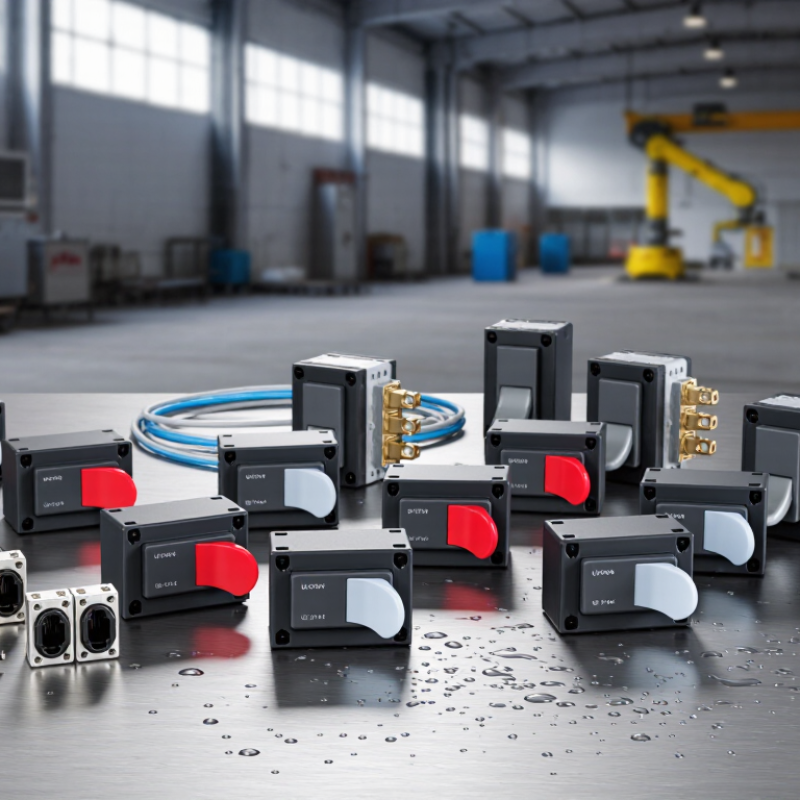
Sealed switches are compact electromechanical devices designed to open or close a circuit while resisting dust, water, oil, and vibration. Their housing usually includes a gasket, sealed actuator, and protected terminals. Many models target IP65, IP67, or higher protection under IEC 60529 testing. IP67 means temporary immersion protection, not permanent underwater operation. That distinction is often overlooked.
Inside, an actuator moves a spring-loaded contact mechanism. A small movement can produce a fast electrical change, reducing contact arcing and improving switching consistency. Normally open contacts close when pressed; normally closed contacts open instead. In machinery, sealed switches monitor doors, pedals, levers, and end positions. Allied Market Research valued the industrial automation market at about $201.3 billion in 2021 and forecast nearly $395.3 billion by 2031. This growth increases demand for dependable sensing components. A 2024 MarketsandMarkets analysis also identified rising factory automation as a key driver for industrial switch adoption.
Real-world selection requires more than an IP number. Engineers should check current rating, voltage, operating force, travel, temperature range, and expected cycles. Salt spray and cleaning chemicals can expose weak seals quickly. In my experience, installers often focus on enclosure protection and neglect cable entry design. That mistake can defeat an otherwise sealed switch. Ratings also depend on test conditions, so datasheets deserve careful review rather than quick comparison.
2026 Top Unionwell Sealed Switch Suppliers Worldwide? - What Are Unionwell Sealed Switches and How Do They Work?
A practical comparison of sealed switch technologies, protection levels, operating characteristics, and supplier-selection criteria. The table uses technical categories rather than company or brand names.
| Sealed Switch Category | Typical Operating Principle | Common Sealing Level | Typical Electrical Use | Typical Mechanical Life | Common Contact Material | Typical Operating Temperature | Typical Applications | Key Selection Criteria |
|---|---|---|---|---|---|---|---|---|
| Sealed Snap-Action Switch | A spring-loaded mechanism rapidly changes contact state when the actuator reaches its operating point. | IP65–IP67 | Low- to medium-power control circuits; ratings vary by configuration. | Approximately 100,000 to 1,000,000 operations, depending on load and design. | Silver alloy for general switching; gold plating for low-level signals. | Approximately −40°C to +85°C; higher ranges are available in specialized designs. | Automotive controls, appliances, industrial equipment, control panels. | Actuator force, travel, contact rating, bounce performance, mounting dimensions. |
| Sealed Tactile Switch | A compact momentary mechanism provides tactile feedback when the button is pressed. | IP54–IP67 | Low-current human-machine interface signals. | Approximately 100,000 to 1,000,000 operations. | Gold-plated or silver-plated contacts, selected according to current level. | Approximately −40°C to +85°C. | Handheld instruments, user interfaces, test equipment, electronic controls. | Sealing method, tactile force, button height, PCB footprint, low-current reliability. |
| Sealed Pushbutton Switch | Manual pressure moves a plunger that opens or closes an electrical circuit. | IP65–IP68 | Signal switching and, in larger constructions, limited power switching. | Approximately 50,000 to 1,000,000 operations. | Silver alloy, gold-plated alloy, or other plated contact systems. | Approximately −40°C to +85°C; application-specific versions may extend beyond this range. | Outdoor controls, machinery, emergency panels, transportation equipment. | Panel thickness, actuator style, reset behavior, contact arrangement, ingress protection. |
| Sealed Rocker Switch | A hinged rocker moves between stable positions to control one or more circuits. | IP55–IP67 | Low- to medium-power on/off control; AC and DC ratings must be checked separately. | Approximately 10,000 to 100,000 operations. | Silver alloy or plated copper-based contact systems. | Approximately −20°C to +85°C. | Power supplies, marine panels, appliances, lighting, industrial controls. | Panel cutout, number of poles, illuminated option, load type, dielectric strength. |
| Sealed Toggle Switch | A lever mechanically changes the position of one or more electrical contacts. | IP67–IP68 | Control and signal circuits; high-current versions require dedicated ratings. | Approximately 10,000 to 100,000 operations. | Silver alloy for general loads; gold plating for signal applications. | Approximately −40°C to +85°C. | Vehicle controls, outdoor instruments, industrial machinery, communications equipment. | Lever configuration, locking or momentary action, terminal style, vibration resistance. |
| Sealed Limit Switch | A mechanical actuator detects movement or position and changes the contact state. | IP65–IP67 | Control circuits used for position, travel, and safety interlocking. | Approximately 100,000 to 10,000,000 operations, depending on actuator and load. | Silver alloy or gold-plated contacts for low-energy control signals. | Approximately −25°C to +85°C. | Conveyors, machine tools, doors, robotics, material-handling systems. | Actuator overtravel, repeatability, switching speed, mounting, cable or connector sealing. |
| Magnetic Reed Switch | A magnetic field causes ferromagnetic reeds inside a sealed glass or molded housing to make or break contact. | Hermetically Sealed | Very low-current signal switching; contact ratings are usually limited. | Up to approximately 10,000,000 operations under suitable load conditions. | Rhodium, ruthenium, or other specialized contact plating. | Commonly approximately −40°C to +125°C, depending on construction. | Door sensors, fluid-level detection, counters, security equipment, proximity sensing. | Operate and release distance, magnetic sensitivity, contact arrangement, switching voltage. |
| Sealed Automotive Switch | Uses a mechanical, membrane, or electronic switching mechanism protected against moisture, dust, and vibration. | IP67–IP69K | Vehicle low-voltage DC control and signal circuits. | Approximately 100,000 to 1,000,000 operations, application dependent. | Silver alloy, gold-plated contacts, or sealed electronic interfaces. | Commonly approximately −40°C to +105°C; some designs support higher temperatures. | Off-road vehicles, commercial vehicles, agricultural machinery, marine systems. | Vibration, water-jet resistance, connector compatibility, current inrush, EMC requirements. |
| Sealed Membrane Switch | Flexible printed layers separate or connect conductive paths when the surface is pressed. | IP65–IP67 | Low-voltage signal inputs and user-interface controls. | Approximately 100,000 to 1,000,000 actuations. | Printed silver, carbon, or gold conductive inks. | Commonly approximately −20°C to +70°C. | Medical devices, industrial HMIs, instruments, kiosks, control consoles. | Graphic overlay durability, tactile feedback, chemical resistance, connector design. |
Technical note: IP65 means protection against dust and water jets; IP67 means dust-tight protection and temporary immersion under the conditions defined by IEC 60529; IP68 requires manufacturer-specified immersion conditions. Actual ratings, electrical loads, operating life, temperature range, and certifications must always be confirmed from the individual product specification.