
Top 10 Benefits of Using a Mixer Pump for Your Projects?

In the world of construction and project management, efficiency is key. The Mixer Pump has gained popularity for its remarkable benefits. It merges the advantages of a traditional pump with effective mixing capabilities. This tool helps streamline processes and reduce labor costs.

Using a Mixer Pump can significantly enhance material consistency. This is crucial for projects requiring precise mixtures. An inconsistency can lead to poor results and waste. Every detail matters in achieving optimal outcomes. Though it simplifies work, understanding its use is essential.

A Mixer Pump also saves time, but improper use can lead to setbacks. It’s easy to overlook maintenance or training. These factors can diminish its potential benefits. Reflecting on these details can help you make the most of your equipment. The choice to utilize a Mixer Pump should be made carefully.
Top 10 Benefits of Using a Mixer Pump for Your Projects?

Key Advantages of Mixer Pumps in Construction Applications

Mixer pumps are becoming essential tools in construction projects. They combine mixing and pumping functions effectively, saving time and labor. These machines handle various materials, like concrete and slurry, which makes them versatile. Their efficiency helps streamline workflows and reduces project delays. In a busy worksite, every minute counts.

Using a mixer pump can lead to consistent material quality. The uniform mixture ensures that all batches are the same. This consistency improves strength and durability. Poor mixing can lead to weak structures, causing safety risks. The built-in features of mixer pumps often allow for precise adjustments, meaning you can tailor the mix as needed.

Tip: Regular maintenance is crucial for optimal performance. Keep an eye on wear and tear. Ensure that parts are functioning properly to avoid major breakdowns. Another tip is to train operators well. A skilled operator can maximize the benefits of the machine. Without proper training, mistakes can occur, leading to costly repairs or delays. Ultimately, investing in a mixer pump simplifies processes, but it requires thoughtful management.
Enhanced Efficiency and Speed in Material Mixing Processes

Using a mixer pump significantly enhances efficiency and speed in material mixing processes. The powerful motor allows for quick and uniform blending of various materials. This means less time spent on preparation and more time on completing your projects. The result? Smoother operations with consistent quality.

Tip: Always consider the material types before mixing. Different materials may require specific mixing speeds or patterns. Testing small batches can help achieve the best results.

With a mixer pump, the reduction in manual effort is notable. Workers can focus on other critical tasks rather than tedious mixing. However, remember that overseeing the mixing process is still essential. Ensuring the right consistency may require adjustments based on your project needs.

Tip: Incorporate downtime for cleaning and maintenance. Regular upkeep prevents malfunctions and maintains efficiency. A well-maintained mixer pump can keep your projects running smoothly and increase productivity.

Top 10 Benefits of Using a Mixer Pump for Your Projects

Benefit Description Impact on Projects
Enhanced Efficiency Mixer pumps combine mixing and pumping processes, reducing time. Faster project completion and reduced labor costs.
Consistency in Mixing Provides uniform material consistency throughout the mix. Improved quality of final product.
Versatility Suitable for various materials and project types. Adaptability to different job requirements.
Reduced Labor Needs Automatic processes minimize manual labor requirements. Lower labor costs and risk of injuries.
Improved Mixing Quality Achieves better bonding and mixing of materials. Higher durability of the end product.
Time-Saving Quick set up and operational speeds lead to time savings. Accelerated project timelines.
Reduced Waste Efficient mixing reduces surplus material left over. Cost savings and environmental impact reduction.
Enhanced Mobility Mixer pumps are often portable for easy relocation. Flexibility in different job sites.
Operational Safety Automated systems reduce manual handling risks. Safer work environment for employees.
Cost-Effectiveness Efficiency and reduced labor lead to lower overall costs. Maximized return on investment for projects.

Reduction of Labor Costs Through Automation and Mechanization

Using a mixer pump can significantly reduce labor costs in construction and other industries. Automation and mechanization have transformed project workflows. According to a report by the International Construction Association, labor costs account for nearly 40% of total project expenses. By implementing a mixer pump, companies can decrease manual labor hours, increasing productivity.

For instance, a mixer pump can transport materials directly to the job site. This eliminates the need for additional workers to haul materials. In one case study, a construction firm reported a 30% decrease in labor hours after switching to mixer pumps. This showcased both efficiency and cost-effectiveness.

However, the integration of mixer pumps demands careful planning. Mismanaged deployment can lead to setbacks. Workers must be trained to operate these machines effectively. Data indicates that 15% of automation projects fail due to a lack of proper training and support. Ensuring proper training can help mitigate risks associated with machine dependency.

Improved Consistency and Quality of Concrete and Grout Mixes

The use of a mixer pump significantly enhances the quality and consistency of concrete and grout mixes. Accurate mixing is critical to achieving the desired strength and durability in construction projects. A report from the American Concrete Institute indicates that inconsistent mixtures can lead to up to a 30% reduction in compressive strength. This underlines the importance of using a mixer pump.

Mixer pumps provide a controlled environment for mixing, which reduces human error. Manual mixing often results in uneven distribution of materials. In a study, 18% of samples from manual mixes failed to meet strength criteria. In contrast, mixer pumps ensure uniformity, leading to more reliable outcomes. This technology optimizes the ratio of water to cement, creating mixes that perform better under stress.

However, it’s not all smooth sailing. Some projects report challenges in achieving the right viscosity with certain materials. Occasionally, pumps struggle with thicker mixes. These variations can sometimes lead to unexpected results. It’s crucial for operators to monitor the mixing closely. Training and experience play significant roles in this process. Being aware of potential pitfalls helps in making necessary adjustments on-site.

Top 10 Benefits of Using a Mixer Pump for Your Projects

This bar chart displays the top 10 benefits of using a mixer pump in construction projects, rated on a scale from 1 to 10. These benefits reflect key factors such as consistency, quality, and overall project efficiency, demonstrating the effectiveness of mixer pumps in enhancing construction outcomes.

Versatility of Mixer Pumps for Various Project Types and Sizes

Top 10 Benefits of Using a Mixer Pump for Your Projects?

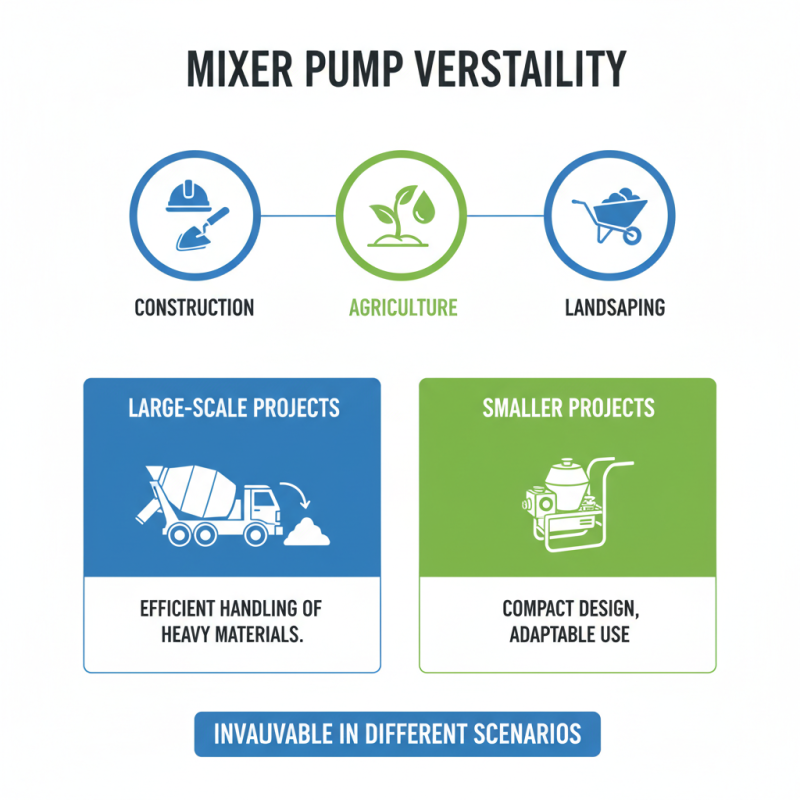
Mixer pumps are essential tools in various projects. Their versatility allows for use in construction, agriculture, and even landscaping. For large-scale projects, they efficiently handle heavy materials. Smaller projects benefit from their compact design. This adaptability makes them invaluable in different scenarios.

When considering a mixer pump for your project, think about the size and type of materials you'll work with. A mixer pump can save time and effort. However, choosing the right model is crucial. Using the wrong pump can lead to inefficiencies. Pay attention to the mixing capacity.

Tip: Always check the specifications of the mixer pump before purchasing. Ensure it aligns with your project's needs. Also, regular maintenance can prolong the pump's life. It’s common to overlook this aspect, leading to potential breakdowns. Adjustments may be required as the project evolves. Stay flexible and ready to tweak your approach.