

10 Tips for Choosing the Right Pump Motors
Pump Motors influence far more than whether a pump starts and runs. Their efficiency, speed control, and compatibility with the pump affect energy use, operating stability, and maintenance demands. A motor that looks suitable on a nameplate may still perform poorly if it rarely operates near its intended duty point.
The U.S. Department of Energy’s Improving Pumping System Performance sourcebook estimates that pumping systems use nearly 20% of global electricity demand. It also notes that pumps can represent 25–50% of energy use in some industrial facilities. These figures are broad estimates, not a promise of savings at any one site. Still, they show why motor selection deserves careful attention. Small mismatches can run continuously, quietly adding cost.
This guide presents 10 practical tips for choosing the right Pump Motors, from checking flow, head, and load to reviewing efficiency, service conditions, and control methods. Compare the motor’s rated output with the pump’s real operating profile, not just its maximum capacity. Check voltage, enclosure, starting requirements, and the surrounding temperature before purchasing. A pump room can be dusty, hot, or damp; those details matter. And one point is easy to overlook: a higher-efficiency motor cannot fix a poorly selected pump. The right choice starts with the whole system. Not just the motor. DOE’s recommendations offer a useful starting point, but site measurements and qualified engineering review should guide the final decision.
Understanding How Pump Motors Work
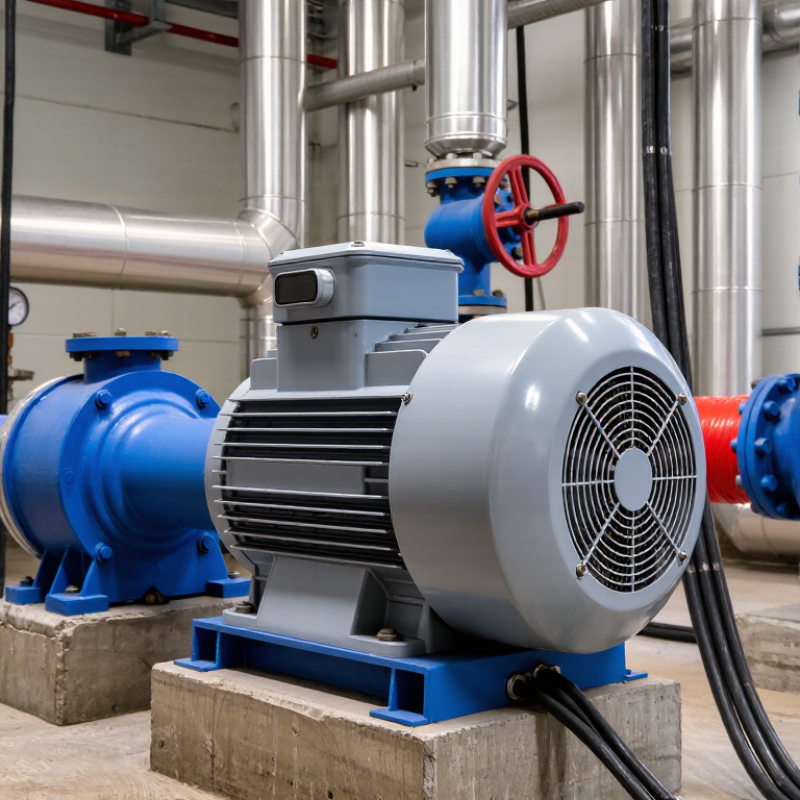
A pump motor converts electrical energy into shaft rotation. In a common induction motor, alternating current creates a rotating magnetic field in the stator. That field induces rotor motion, turning the shaft and impeller. The impeller transfers energy to the fluid, raising its pressure or flow. Listen near the casing: steady vibration is normal, but scraping or uneven humming deserves investigation. Small clues matter.
The International Energy Agency’s report, Energy-Efficiency Policy Opportunities for Electric Motor-Driven Systems, estimates that motor-driven systems use about 45% of global electricity. This broad figure includes pumps, fans, and other equipment, not pumps alone. For centrifugal pumps, speed strongly affects energy use: reducing speed can cut power substantially when system demand also falls. The U.S. Department of Energy’s Improving Pumping System Performance guide recommends evaluating the complete system, rather than judging a motor by its nameplate alone. A motor may be correctly rated yet waste energy against a throttled valve.
When comparing motors, check voltage, frequency, rated speed, enclosure, and duty cycle against the site conditions. Heat, dust, and frequent starts can change what works reliably. Measure flow and pressure under actual operating conditions; drawings can be optimistic. Real installations are messier. I would also question a proposed efficiency upgrade if nobody has measured the pump’s load. A neat calculation is useful, but it is not the machine.
10 Tips for Choosing the Right Pump Motors — Understanding How Pump Motors Work
This chart compares synchronous motor speed at common power-supply frequencies. Use it to understand how frequency and pole count affect a pump motor’s operating speed.
How to read it: Synchronous speed is calculated as 120 × frequency ÷ number of poles. An induction motor’s actual operating speed is slightly lower because of slip, and varies with motor design and load. Check the motor nameplate and pump requirements when selecting a motor.
Identifying Application and Performance Requirements
Start with the liquid and the job, not the motor nameplate. Record required flow, total head, fluid temperature, viscosity, and any solids or corrosive conditions. Note whether the pump runs continuously, cycles often, or faces a changing load. A motor sized for peak demand may waste energy during normal operation. Measure it on site. Confirm supply voltage, phase, starting method, and the enclosure needed for dust, moisture, or heat. For variable demand, check whether speed control can keep the pump near its efficient operating range.
The U.S. Department of Energy’s Improving Pumping System Performance: A Sourcebook for Industry reports that pumping systems account for nearly 20% of global electricity demand. The IEA’s 2011 Energy-Efficiency Policy Opportunities for Electric Motor-Driven Systems estimates motor-driven systems use about 45% of global electricity.
These figures make operating conditions worth checking, not guessing.
Compare the motor’s rated output with the pump’s actual load, and review efficiency at the expected duty point. Check starts per hour and thermal limits, too. A tidy calculation can still miss a partly blocked strainer or a hot equipment room. I would verify the measurements after installation; real systems rarely behave perfectly.
Comparing Motor Types, Ratings, and Controls
10 Tips for Choosing the Right Pump Motors
Tip: Match motor type to the load. Standard induction motors suit many steady-duty pumps; permanent-magnet motors can offer higher efficiency where compatible controls are available.
Tip: Check the pump’s flow and head across its full operating range, not just its nameplate point.
Tip: Verify voltage, phase, frequency, and starting method against the site supply.
Tip: Read the duty rating carefully. Continuous operation in a hot, dusty room differs from occasional use in a clean, cool space.
Tip: Confirm enclosure and insulation requirements before ordering.
Tip: Compare efficiency at the actual load, not only at full load. The International Energy Agency’s 2011 report, Energy-Efficiency Policy Opportunities for Electric Motor-Driven Systems, estimates these systems use about 45% of global electricity. Small efficiency gains can matter over long operating hours.
Tip: Check service factor, temperature limits, and altitude derating with the motor supplier.
Tip: Size variable-frequency drives for motor current and starting demands.
Tip: For centrifugal pumps, speed control can reduce energy use when demand varies; the system curve still matters. A spreadsheet may miss real pipe losses.
Tip: Confirm control compatibility, including sensor signals and minimum-speed limits.
Tip: Ask how overload, dry-run, and restart conditions will be handled.
Tip: Leave room in the control panel for heat and maintenance access.
A tidy specification helps, but it is not a substitute for measuring the installed system’s operating point.
Evaluating Efficiency and Operating Conditions
A pump motor’s efficiency rating matters, but it only tells part of the story. Match the motor’s load to the pump’s actual duty point, not just its maximum flow. A motor running far below its useful load may waste energy, while an undersized unit can overheat during long cycles. Check the operating curve against measured flow, head, and pressure. Small differences matter.
Look closely at conditions around the installation. A motor in a hot, dusty room needs different protection and cooling than one in a clean, ventilated plant. Note ambient temperature, elevation, moisture, and how often the motor starts. Repeated starts can raise heat even when the average load seems modest. Verify the supply voltage and phase, too; unstable voltage can increase current and shorten insulation life.
Variable-speed control can reduce energy use when demand changes, but it is not automatic. Confirm that the pump stays within its safe operating range at low speed, and check cooling requirements. Compare expected yearly energy costs with purchase and maintenance costs. A strong efficiency rating on paper can disappoint in a poorly matched system. Field measurements help, though readings may fluctuate.
| No. | Selection Tip | What to Evaluate | Practical Check |
|---|---|---|---|
| 1 | Match motor output to the pump duty | Check the pump’s required shaft power at the actual flow and head, including the operating range. Avoid sizing solely from the pump’s maximum listed capacity. | Compare the pump curve and motor rating at minimum, normal, and maximum expected duty. Allow for starting and process requirements without excessive oversizing. |
| 2 | Compare efficiency at the expected load | Motor efficiency varies with motor size, design, and load. A high-efficiency rating alone does not show how efficiently the motor will operate at the site’s typical load. | Review the manufacturer’s efficiency data at the anticipated load points and check which efficiency regulations and test standard apply in the installation location. |
| 3 | Check the efficiency class and test basis | IEC 60034-30-1 defines IE efficiency classes for many line-operated motors. Applicable classes, minimum requirements, and covered motor types depend on local regulations and motor specifications. | Confirm the stated IE class, rated output, frequency, pole count, and test standard on the technical data sheet or motor nameplate. |
| 4 | Verify supply voltage and frequency | The motor’s rated voltage, frequency, phase, and connection must suit the available electrical supply. Operation outside the specified range can affect heating, torque, and performance. | Match the motor nameplate to the site supply and check allowable voltage and frequency tolerances with the motor documentation. |
| 5 | Account for ambient temperature and altitude | High ambient temperatures and high elevations can reduce cooling capability and may require derating. Permitted conditions depend on the motor’s design and rating. | Compare the installation temperature and elevation with the motor’s rated limits. Request a confirmed output rating if the site is outside those limits. |
| 6 | Choose an enclosure suited to the environment | Dust, moisture, washdown, corrosive atmospheres, and outdoor exposure affect the required enclosure and protection. An enclosure rating does not replace proper installation and maintenance. | Specify the actual exposure and verify the relevant ingress-protection or enclosure rating, materials, and any hazardous-area certification required by local codes. |
| 7 | Assess variable-speed control needs | A variable-frequency drive can control pump speed, but the motor must be suitable for inverter operation. Low-speed cooling, insulation stress, cable length, and bearing currents may need consideration. | Confirm the required speed range and duty cycle with the motor and drive documentation, and check whether additional cooling or electrical protection is needed. |
| 8 | Consider the pump’s load characteristics | Centrifugal pumps commonly have variable-torque loads. Under ideal affinity-law conditions with the same impeller, flow varies roughly with speed, head with speed squared, and power with speed cubed. | Use the pump curve and system curve to confirm the operating range. Treat affinity-law estimates as approximations, especially where static head or system constraints are significant. |
| 9 | Check starting and cycling demands | Starting current, available supply capacity, acceleration time, and the number of starts per hour can affect motor and control selection. Frequent starts can increase thermal stress. | Compare the pump’s starting torque needs with the motor and starter characteristics, and confirm the permitted starting frequency with the equipment documentation. |
| 10 | Evaluate lifecycle energy and maintenance | Operating hours, electricity cost, load profile, and maintenance access often matter more over time than purchase price alone. Poor alignment, ventilation, or bearing condition can reduce reliability and efficiency. | Estimate annual energy use from measured or documented input power and operating hours. Include installation, inspection, alignment, lubrication, and likely replacement costs in the comparison. |
Checking Compatibility, Installation, and Maintenance
Choosing a pump motor starts with the pump’s actual operating conditions, not just its rated power. Match voltage, phase, frequency, speed, and shaft arrangement to the site supply and pump specifications. Check the required flow and pressure against the motor’s continuous-duty rating. A motor that is too small may overheat; an oversized one can waste energy. Small details matter. Also consider fluid temperature, nearby moisture, dust, and ventilation when selecting the enclosure. Do not assume two motors with similar dimensions are interchangeable. Check the nameplate twice.
Installation affects performance as much as selection. Set the motor and pump on a firm, level base, then align the shafts or coupling carefully. Poor alignment often shows up as vibration, noise, or early bearing wear. Leave enough clearance around cooling openings, and keep cables away from hot surfaces and moving parts. Secure connections according to the equipment instructions, and have electrical work checked by a qualified professional. A rushed installation can look fine at first. It may not stay that way.
For maintenance, record normal vibration, operating temperature, pressure, and current soon after startup. These readings make gradual changes easier to spot. Inspect seals for leaks and listen for new bearing noise; clean blocked vents and strainers before they restrict flow. Follow the manufacturer’s service intervals, but adjust inspections when dust, heat, or frequent starts increase wear. Keep records simple. One detail is easy to miss: recurring small leaks can point to alignment or pressure problems, not just a worn seal.
Related Posts
-
2025 Innovations in Hydraulic Pumps: Transforming Efficiency and Sustainability in Industrial Applications
-

Mastering Hydraulic Pumps: A Step-by-Step Guide for Global Buyers
-
Troubleshooting Common Issues in Hydraulic Parts: A Global Procurement Perspective
-

10 Best Pump Companies for Global Buyers?
-
7 Key Reasons Why Hydraulic Pump Parts Are Essential for Operational Efficiency
-
How to Choose the Right Eaton Hydraulic Motors for Your Applications?