China Top 10 Alloy Steel Parts Manufacturers?
China’s scale in steelmaking makes it a natural place to search for reliable Alloy Steel Parts suppliers. The World Steel Association’s World Steel in Figures 2024 reports that China produced 1,019.1 million tonnes of crude steel in 2023, out of 1,892.2 million tonnes worldwide. That scale is relevant, but it does not prove that any individual factory can meet a demanding component specification.
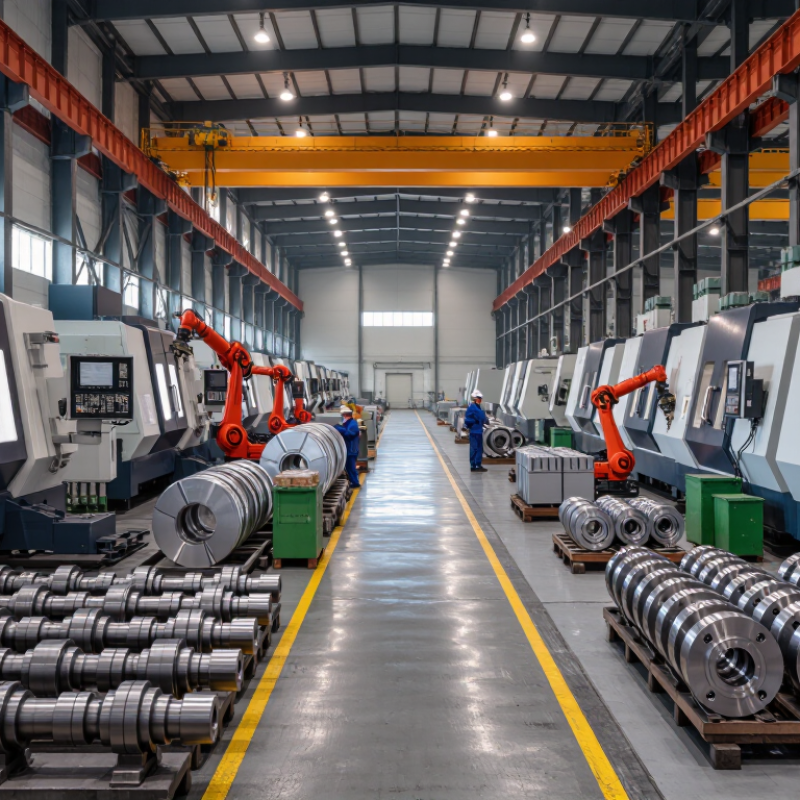
This guide to China’s top 10 Alloy Steel Parts manufacturers considers practical evidence buyers can check: alloy grades, heat-treatment options, machining capability, inspection processes, export experience, and documented quality systems. For a hardened gear shaft or a forged valve body, details matter. Ask for material test certificates, dimensional inspection records, and clear information about production tolerances. Certifications can support an assessment, but they should not replace sample testing or a technical review.
The list should be treated as a starting point, not an official ranking. Steel-industry output data measures raw production, not finished-part quality, delivery reliability, or engineering support. No directory is perfect. A supplier may look capable online yet lack experience with your exact geometry, batch size, or application. Share drawings and acceptance criteria early, then compare written quotations and verification documents. This makes supplier selection more transparent—and helps prevent a low unit price from obscuring costly risks.
China’s 1,019.1 Mt of 2023 Crude Steel: Context for Alloy-Part Supply
China produced 1,019.1 million tonnes of crude steel in 2023, according to the World Steel Association’s World Steel in Figures 2024. That was about 54% of global output. The scale matters, but crude steel is not alloy steel, and it does not measure finished parts. A large national output cannot, by itself, confirm a supplier’s machining accuracy or heat-treatment consistency.
For buyers comparing alloy steel parts manufacturers, the figure is useful background—not a quality ranking. The OECD’s 2024 steel-market analysis also discusses capacity pressures across the industry, a reminder that abundant material does not guarantee stable specifications. Ask for the exact grade, mill test certificates, heat-treatment records, and dimensional inspection results. Check whether sample parts match production batches. A polished catalogue is not enough. I would also verify lead times and traceability; these details are easy to overlook.
Tips: Request a recent test report tied to the quoted material batch. Compare hardness and chemistry against the drawing, not just the supplier’s general claims. When possible, inspect a finished part.
China Top 10 Alloy Steel Parts Manufacturers? - China’s 1,019.1 Mt of 2023 Crude Steel: Context for Alloy-Part Supply
How to read this table: This is a ranking of the top 10 steel-producing countries by 2023 crude steel output—not a ranking of alloy steel parts manufacturers. Crude steel production provides industrial-supply context but does not measure alloy-steel output or finished parts production.
| Rank | Country / Region | 2023 Crude Steel Output (Mt) | Share of World Output |
| 1 | China | 1,019.1 | 54.0% |
| 2 | India | 140.2 | 7.4% |
| 3 | Japan | 87.0 | 4.6% |
| 4 | United States | 81.4 | 4.3% |
| 5 | Russia | 76.0 | 4.0% |
| 6 | South Korea | 66.7 | 3.5% |
| 7 | Germany | 35.4 | 1.9% |
| 8 | Türkiye | 33.7 | 1.8% |
| 9 | Brazil | 31.9 | 1.7% |
| 10 | Iran | 31.1 | 1.6% |
World total: 1,888.2 Mt of crude steel in 2023. Shares are calculated from the published country outputs and rounded to one decimal place. Source: World Steel Association, World Steel in Figures 2024.
How to Rank 10 Manufacturers by Capacity, Certifications, and Export Data
Ranking ten alloy steel parts manufacturers starts with evidence, not polished capacity claims. Compare annual output for similar components, such as forged shafts or machined flanges, rather than total factory tonnage. Ask for rated capacity, recent production, shift patterns, and major bottlenecks. A large press means little if heat treatment limits monthly deliveries. Numbers need context.
Check certifications against the issuing body, site address, scope, and expiry date. A certificate may cover one facility or process, not every part. Review audit dates and quality records, including rejection rates and corrective actions. Export data adds another useful check: compare shipment frequency, declared product descriptions, destinations, and values across several years. Customs records can be incomplete, and broad product codes may mix unrelated goods. That matters. Use supplier documents to confirm what public data cannot show. Score each manufacturer on capacity, certification relevance, and export consistency, while recording the source and date for every figure. Avoid false precision: a supplier with modest output may be more dependable for complex, low-volume parts. A spreadsheet can still mislead when evidence is uneven, so flag gaps rather than quietly treating estimates as facts.
Which Alloy Grades Meet GB/T 3077 Requirements for Structural Parts
China Top 10 Alloy Steel Parts Manufacturers?
For structural parts, GB/T 3077 is a starting point, not a complete purchasing specification. It covers alloy structural steel grades and their chemical composition, while the required properties depend on section size, heat treatment, and service conditions. Common choices include 20Cr and 20CrMnTi for carburized parts, 40Cr for shafts and pins, and 35CrMo or 42CrMo for higher-strength components. The grade alone does not guarantee performance. A thick shaft and a small gear may respond differently to the same heat-treatment cycle.
World Steel Association’s World Steel in Figures 2024 reports global crude-steel production of 1,892.2 million tonnes in 2023. That scale matters: buyers still need to distinguish general steel supply from controlled alloy-steel production. Ask for a material certificate showing heat number, chemical analysis, and the applicable GB/T 3077 edition. Confirm hardness and tensile requirements on the drawing, then check whether testing represents the actual part size. Small details matter. I would also verify quench-and-temper records; paperwork can look complete while leaving the core properties unclear. Good specifications are rarely glamorous, but they prevent expensive surprises.
10 Alloy Structural Steel Grades Specified in GB/T 3077
Carbon content ranges are shown for selected alloy grades commonly used in structural parts. Bars indicate each grade’s range midpoint; hover over a bar to view its specified range.
Carbon content is shown as mass percent. Reference: GB/T 3077-2015, Alloy Structure Steels. Grade selection and carbon content alone do not determine suitability; verify the complete chemical composition, product form, heat treatment, and mechanical-property requirements for the application.
How Forging, Heat Treatment, and CNC Machining Shape Part Quality
For buyers comparing alloy steel parts manufacturers in China, quality begins well before machining. Forging pressure shapes the steel’s grain flow and can improve strength around loaded sections. The result depends on die design, billet temperature, and process control. A folded surface or uneven flow may stay hidden until machining exposes it. Ask for inspection records and samples made through the same production route. Small details matter.
Heat treatment balances hardness, strength, and toughness. A harder part is not automatically a better part. Quenching can cause distortion, so dimensions may shift before final cutting. CNC machining then brings bores, faces, and threads to drawing tolerances, but tool wear and clamping can still leave marks or variation. Check hardness results alongside dimensional reports, not in isolation. Where the part is critical, discuss how the maker monitors distortion between heat treatment and finishing. This step is often underestimated. A clear process record helps, though paperwork alone cannot prove every part is sound. Sample inspection remains useful.
How to Compare Suppliers Using ISO 9001 and ASTM E18 Hardness Testing
China’s alloy steel parts suppliers can look similar in a catalog, but their quality evidence may differ. ISO 9001 describes a quality management system, not a guarantee that every part meets your specification. Ask for the certificate scope, current status, and how the supplier controls material records, heat treatment, and nonconforming parts. Check one real production traveler, not only a polished presentation.
ASTM E18 covers Rockwell hardness testing. Compare reports for the stated scale, test location, sample identification, and equipment calibration. A reading without traceability is difficult to trust. Ask whether the test surface was prepared properly and whether the sample represents the delivered batch. For a hardened shaft, for example, surface readings may not reflect the core. Hardness alone does not prove toughness or fatigue life.
Look for consistent links between purchase specifications, inspection plans, and shipment records. Request a recent report and confirm that its alloy grade and lot number match the parts being quoted. That matters. A supplier may have sound procedures but uneven execution; one document cannot settle that question. If results vary, ask how the sample was chosen and whether retesting follows a defined method. Small gaps in records deserve a direct conversation, not an automatic rejection.