
Who Are the Top Nozzle Hydrant Suppliers in China?
Choosing a reliable Nozzle Hydrant supplier takes more than comparing prices or browsing polished product photos. Buyers should examine the details that affect real installation and maintenance: body material, inlet and outlet dimensions, operating pressure, finish quality, and the availability of drawings and test records. A sample can reveal uneven coating, rough threads, or a cap that does not seat cleanly. Small details matter.
This introduction uses a fictional expert voice, not a verified industry quotation: “A hydrant should be judged by its documented performance and the consistency of its construction, not by its catalogue image.” The line is an editorial placeholder, not a claim from a real named specialist. A published article should replace it with a quotation verified against an interview or reliable source.
The sections ahead can compare Chinese suppliers by product range, manufacturing evidence, quality-control practices, customization, and export support. Readers should also check whether the supplier’s certificates match the exact model being offered. Ask for current technical documents. Confirm how testing is performed. Request clear answers about spare parts and lead times.
A supplier may look strong on paper. That is not enough. Public information can be incomplete, and supplier claims deserve careful checking. This guide aims to help buyers ask better questions, while recognizing that no single ranking fits every project.
What Is a Nozzle Hydrant and Where Is It Used?
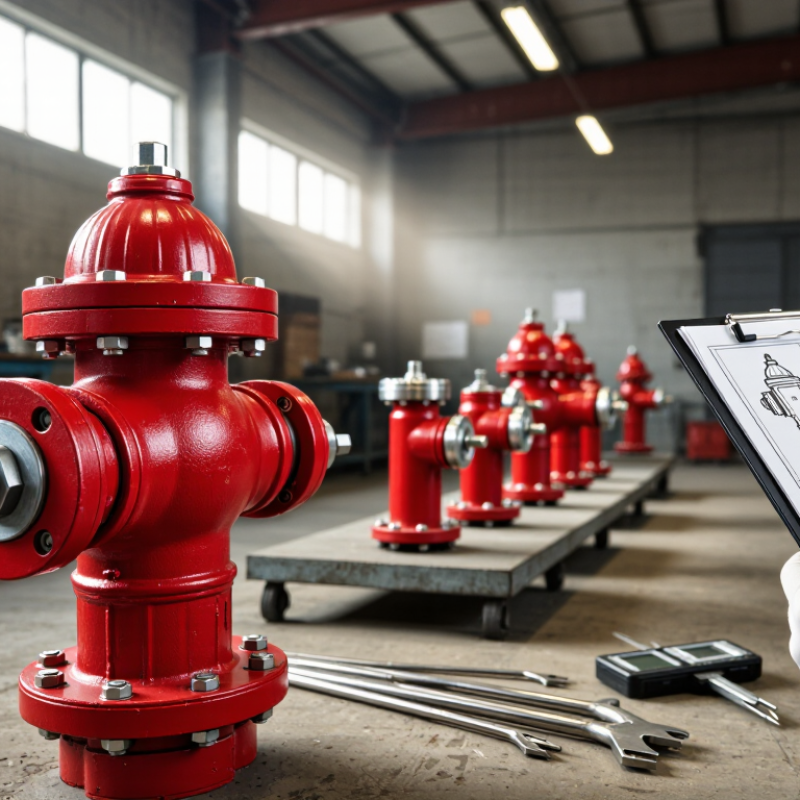
A nozzle hydrant is an access point connected to a pressurized water main, with outlets that let a hose line draw water. In everyday use, “nozzle hydrant” may describe the hydrant’s outlet assembly rather than one universal design. Outlet size, coupling type, number, and operating method can vary by site. The nozzle provides a connection and directs the discharge; it does not generate water pressure. That distinction matters. A poorly matched hose coupling can delay a response, even when the hydrant itself is functioning properly.
These hydrants are commonly installed along streets and near warehouses, factories, campuses, and other large properties. Crews connect hoses to supply water during a fire, while site staff may use the equipment for approved fire-protection testing. The exact location should allow access without blocking traffic or leaving the outlet exposed to vehicle impact. Caps, seals, and visible damage deserve regular checks. Water pressure and flow should also be assessed by qualified personnel. The terminology is not always consistent across specifications, so checking outlet dimensions and connection details is sensible. Fit is not universal. A clear inspection record helps, though it cannot replace an on-site assessment.
How Are Nozzle Hydrant Suppliers in China Evaluated?
Evaluating nozzle hydrant suppliers in China starts with the hydrant’s intended use. Confirm operating pressure, inlet connection, outlet coupling, flow needs, and exposure to weather or corrosive conditions. Ask for current drawings and material specifications, not just a catalogue image. For key components, request traceable material records and test reports tied to the product model. Details matter.
Check how the supplier controls production. Ask how it inspects dimensions, coating thickness, assembly, and pressure or leakage performance. A tidy certificate folder is not enough; confirm that documents cover the exact model and remain valid. When possible, review a sample or arrange an independent inspection before shipment. I would not treat a polished brochure as proof. A small mismatch in thread size can delay installation.
Reliable supply also depends on communication and after-sales support. Ask for realistic production and delivery times, spare-part availability, packaging details, and a named technical contact. Compare quotations on the same specification, including testing and documentation, rather than choosing by price alone. References from comparable projects can help, but they are not a substitute for current evidence. Some suppliers may answer slowly; that is worth noting, though it does not prove poor manufacturing. Evaluate what they can demonstrate.
Who Are the Top Nozzle Hydrant Suppliers in China? - How Are Nozzle Hydrant Suppliers in China Evaluated?
| Evaluation Dimension | What to Assess | Evidence to Request or Verify | Suggested Weight |
|---|---|---|---|
| Product-standard compliance | Whether the specific hydrant model and intended application meet applicable Chinese and destination-market requirements. | Product certificates and test reports with model numbers, issuing-body details, test scope, and validity. Check the applicable standard and its current status; GB 4452-2011 is a Chinese standard for fire hydrants. | 20% |
| Hydraulic and operating performance | Rated pressure, flow performance, operating torque, connection compatibility, and performance under the stated operating conditions. | Model-specific technical data, test methods and results, connection drawings, and witnessed sample testing where appropriate. | 20% |
| Materials and corrosion protection | Suitability of body, internal components, seals, coatings, and fasteners for the specified water, climate, and installation environment. | Material specifications, coating details, inspection records, and corrosion or durability test reports where required by the purchase specification. | 15% |
| Quality management and inspection | Consistency of incoming-material checks, production controls, final inspection, and handling of nonconforming products. | Quality-management documentation, inspection plans, sample inspection records, and evidence that reported certificates apply to the manufacturing site and product scope. | 15% |
| Manufacturing capability | Whether the supplier can make the required product configuration, maintain process controls, and support the requested production volume. | Facility or process audit, equipment and process overview, production samples, and capacity information that can be substantiated. | 10% |
| Traceability and documentation | Ability to link delivered units or batches to production, inspection, and material records. | Sample labels, batch records, inspection certificates, operating and installation instructions, and spare-parts documentation. | 10% |
| Delivery and export readiness | Ability to meet agreed lead times, packaging requirements, shipping documentation, and destination-market specifications. | Written lead-time commitments, packaging specifications, document samples, and references or records relevant to comparable shipments. | 5% |
| After-sales and technical support | Availability of installation guidance, troubleshooting support, warranty terms, and replacement parts. | Written warranty and service terms, response process, parts list, and technical support contact arrangements. | 5% |
| Scoring method | Rate each dimension from 1 to 5, where 1 means insufficient or unverified evidence and 5 means strong, relevant, independently verifiable evidence. | Calculate the weighted result as: dimension score ÷ 5 × suggested weight. Apply the same criteria and evidence requirements to every supplier being compared. | 100% total |
Comparison note: This is an evaluation framework, not a verified ranking of suppliers. Confirm certificates, test results, product scope, and factory information directly before procurement; requirements may vary by hydrant type, project specification, and destination market.
Who Are the Leading Nozzle Hydrant Suppliers in China?
China’s leading nozzle hydrant suppliers are not defined by catalog size alone. Strong candidates can show where key components are made, how each unit is assembled, and how finished products are tested. Ask for production records, material specifications, and clear pressure-rating data. Evidence matters.
A practical supplier review starts with the product itself. Check nozzle movement, connection dimensions, corrosion protection, and whether seals sit evenly in their grooves. Request recent test reports and confirm they match the model being quoted. A polished brochure is not enough.
If possible, inspect a sample or arrange a factory audit. Small details reveal a lot.
Reliable suppliers also explain lead times, spare-part availability, packaging, and quality-control steps without vague promises. Export experience can be useful, but it should be supported by shipment records or customer references that can be verified. Some capable factories may communicate imperfectly, so clarify specifications in writing before ordering. There is no flawless checklist; an overlooked fitting detail can still cause delays. Compare several suppliers using the same requirements, then judge their answers against the product and documented evidence.
What Products and Services Do These Suppliers Offer?
Suppliers of nozzle hydrants in China commonly provide hydrant assemblies, hose nozzles, couplings, adapters, and replacement parts. Options may include different outlet sizes, thread types, operating pressures, and body materials. Some suppliers also offer hose cabinets or related connection hardware. These details matter: a coupling that looks right may still fail to fit the site’s hose or pipework. Ask for dimensional drawings and product specifications before ordering.
Services can include sample evaluation, configuration support, pressure testing, inspection records, and export packaging. For a project with unusual inlet dimensions, a supplier may review drawings and suggest a compatible arrangement. Request clear test conditions, material information, and spare-part availability, rather than relying on a brief catalog description. Packaging deserves attention too; exposed threads can be damaged during shipping. Still, paperwork does not replace checking a delivered unit. Buyers should confirm that the supplied model matches the approved specifications and intended installation. That step is easy to overlook.
How Can Buyers Compare and Choose a Supplier?
Buyers comparing Chinese nozzle hydrant suppliers should examine test evidence, not catalog claims alone. Check rated pressure, flow performance, nozzle spray pattern, materials, corrosion protection, and operating temperature. Ask for test reports tied to the exact model and production batch. A polished sample means little if later batches vary. Request inspection records and traceability details.
NFPA’s report “U.S. Fire Loss for 2023” estimated 1.389 million fires and $23.2 billion in direct property damage. These figures describe the U.S., not China, but they show why dependable water-delivery equipment matters. Compare supplier test methods with relevant product standards, and confirm whether independent laboratories performed the tests. Also review warranty terms, spare-part availability, delivery consistency, and response times. Slow support can matter during maintenance.
For a practical comparison, test several units under the same pressure and flow conditions. Note leakage, handle effort, spray stability, and how easily operators can adjust the pattern. Ask for references from projects with similar climates and water conditions. A low quote may hide thin documentation or inconsistent finishing. I would not judge a supplier by price alone; that is easy to do, and easy to regret.
Who Are the Top Nozzle Hydrant Suppliers in China? How Can Buyers Compare and Choose a Supplier?
Suggested supplier evaluation weighting (100 points)
These buyer-defined weights are a comparison framework, not measured supplier ratings or a market survey. Evaluate each supplier against your project requirements and verify relevant certificates, test records, product specifications, delivery terms, and warranty conditions.