5 Best Professional Board Games Manufacturers Worldwide
The global board games market is moving beyond hobby stores and family tables. Grand View Research estimates that the market reached USD 11.88 billion in 2023. It also projects a 10.2% compound annual growth rate from 2024 to 2030. However, market estimates differ by research method and product definition. That gap deserves attention.
Choosing a Professional Board Games Manufacturer requires more than comparing factory prices. A reliable partner should demonstrate precise prototyping, stable component quality, documented safety testing, and dependable international logistics. Inspect a sample box closely. Card edges should remain clean. Miniatures should hold fine details. The rulebook should open flat without splitting.
Reiner Knizia, one of the board game industry’s most respected experts, describes the design principle clearly: “A game is a series of interesting choices.” Manufacturing must protect those choices through accurate printing, balanced components, and consistent assembly. This is where experience becomes visible.
This guide examines five leading manufacturers worldwide. It considers production capability, customization, quality control, sustainability practices, and communication standards. These factors matter for publishers, retailers, independent designers, and corporate buyers. A polished prototype can still fail at scale. That is an uncomfortable reality.
The ranking is not absolute. Regional strengths, order volumes, certification requirements, and delivery schedules can change the best choice. Readers should verify current facilities, sample quality, audits, and contractual terms before placing an order. Supplier websites alone are not enough. Direct evidence matters.
Defining Professional Board Game Manufacturing Standards
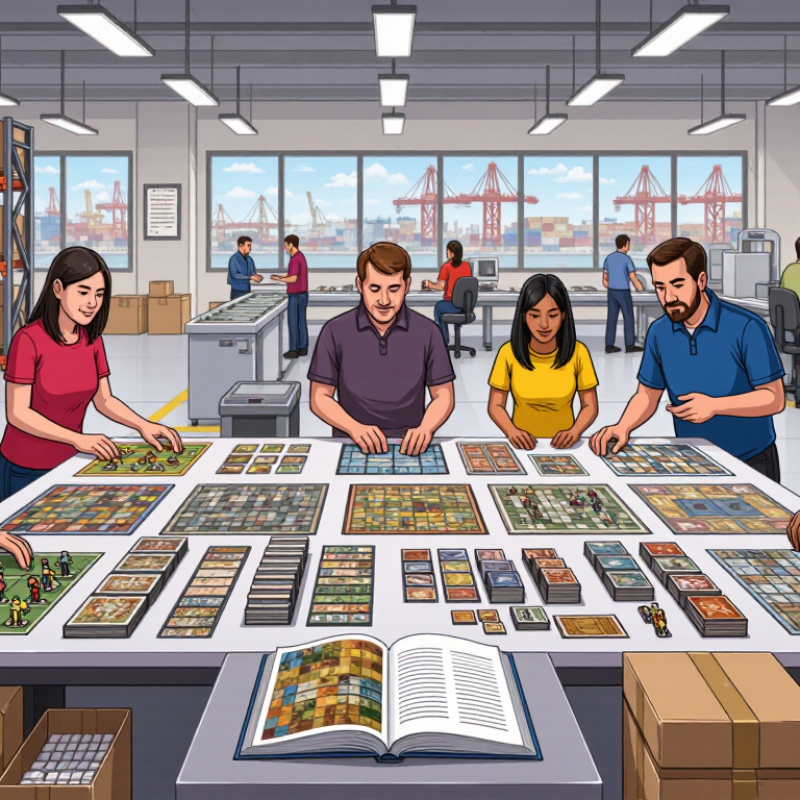
Professional board game manufacturing is more than printing attractive artwork. A dependable process begins with clear specifications: card size, paper weight, finish, board thickness, color references, and acceptable tolerances. Small details matter. A slick card can feel out of place beside a textured deck. A folding board should open flat, with aligned joins and no raised edges. Manufacturers should document proofs, approve production samples, and compare finished batches against them. These steps make quality visible, not just promised.
Testing should include the components players handle repeatedly. Shuffle the cards, punch tokens from their sheets, and assemble the box after packing it. Check whether small icons remain readable under ordinary room lighting. Packaging deserves scrutiny too; inserts should hold pieces securely without forcing the lid shut. Reliable suppliers explain material choices, inspection points, lead times, and how they handle defects. Request samples and written tolerances, then examine the parts yourself. No checklist catches everything. Even experienced teams can miss a color shift or an overly snug tray, so feedback should lead to specific revisions. It is unglamorous work, but it helps preserve the game’s feel at the table.
Key Criteria for Evaluating Global Board Game Manufacturers
Choosing a board game manufacturer starts with evidence, not a polished sample. Grand View Research estimated the global board games market at USD 13.06 billion in 2023, with projected growth through 2030. That expanding market makes reliable production capacity important, but capacity alone proves little. Ask for recent production records, defect rates, and delivery performance. Request a sample from a regular production run, not only a hand-finished showroom copy. Look closely at card edges, color consistency, and whether small tokens fit their compartments. Small details matter.
Quality systems and safety controls deserve equal scrutiny. Ask which test methods apply to the game’s materials and target age, and request current test reports from qualified laboratories. Standards such as ISO 8124 and ASTM F963 may be relevant, depending on the market and product. Confirm that the tested sample matches the materials and components used in mass production. A certificate without traceable batch records is weak reassurance. Check how the factory handles artwork files, component changes, reprints, and corrective actions. Clear answers are useful. Vague promises are not. Compare minimum order quantities, tooling charges, packaging options, and lead times in writing; then verify them against a pilot run. Even a careful supplier can miss a detail, so leave room for review. I would not treat one successful sample as proof of consistent production.
Profiles of Five Leading Board Game Manufacturers Worldwide
The strongest professional board game manufacturers worldwide are not identical. Each has a different production strength and market focus. An established European manufacturer often excels at detailed miniatures and premium finishes. Its factory teams understand painting, molding, and careful component inspection. A large East Asian producer usually offers efficient mass production and flexible packaging. It can handle thousands of identical boxes with impressive consistency. However, rushed schedules may create small color or alignment problems.
A North American manufacturer often supports independent designers with short production runs. Its staff may provide useful guidance on rules presentation, prototypes, and retail packaging. A specialized European printer focuses on cards, boards, and vivid color accuracy. Its technical experience helps preserve tiny symbols and readable text. The fifth profile is a sustainability-focused manufacturer using recycled cardboard and water-based inks. This approach reduces material impact, though eco-friendly options can raise costs and limit some finishes. No supplier is perfect. My own sourcing experience suggests that attractive samples can hide weak communication or late quality checks.
Tips: Request a physical prototype before signing a large order. Check card thickness, corner cutting, box strength, and color matching. Ask for a documented inspection process. Confirm production timelines in writing. Compare shipping terms, not only unit prices. A cheaper quotation may become expensive after revisions, delays, or damaged cartons. Keep spare components in the plan, because even careful factories occasionally miss a piece.
Operating History of Five Established Tabletop Game Manufacturers
Years in operation through 2025, calculated from publicly reported founding years. Company identities are intentionally omitted.
The chart compares company longevity, not production volume, revenue, or market share.
Comparing Production Capabilities, Quality, and Customization
5 Best Professional Board Games Manufacturers Worldwide: Comparing Production Capabilities, Quality, and Customization
The strongest manufacturers differ in scale, quality control, and customization depth. Grand View Research estimates the global board games market could grow at a 13.7% CAGR from 2023 to 2030. That growth increases pressure on production reliability.
Large factories usually offer automated card cutting, color matching, and stable monthly capacity. Smaller specialists may provide better prototype feedback and unusual components. Neither option is always superior.
Quality depends on more than attractive samples. Check paper thickness, corner cutting, print registration, coating durability, and component tolerances. Ask for batch inspection records and an independent pre-shipment report. ISO 9001-based processes can improve consistency, but certification alone proves little.
Customization may include custom molds, linen-finish cards, magnetic boxes, wooden tokens, and multilingual packaging. These features raise tooling costs and extend lead times. Research and Markets reported continued expansion in the global games market, making predictable replenishment increasingly important. I have seen beautiful prototypes fail because replacement parts were not planned.
Tips: Compare five manufacturers using the same specification sheet. Request a physical sample, not only digital proofs. Test cards under bright light and repeated shuffling. Confirm minimum order quantities, tooling ownership, carton strength, and defect allowances. Ask how recycled paper and certified materials affect pricing. Build a pilot run before committing to a large order. Small errors become expensive quickly.
Selecting the Right Manufacturer for Different Board Game Projects
Selecting the Right Manufacturer for Different Board Game Projects
The right manufacturer depends on your project, not a universal ranking. Grand View Research valued the global board games market at about USD 13.06 billion in 2023. Its forecast also expects steady growth through 2030. This pressure rewards reliable production, but cheaper quotes can hide costly compromises.
For a card-heavy strategy game, choose a supplier with precise color control, smooth card stock, and automated collation. Ask for a physical proof. A digital image is not enough. Family games need durable boards, rounded tokens, and safe coatings. A miniature-focused project requires accurate molds, stable plastic, and careful hand assembly. For premium editions, inspect foil stamping, linen texture, magnetic closures, and protective inserts. Small details sell the experience.
Different order sizes need different partners. A new publisher may need low minimum quantities and flexible sampling. A retail launch needs stronger capacity, documented quality checks, and dependable freight planning. The 2024 Circana toy industry report showed continuing pressure on consumers and retailers, making production waste especially risky. Request material certificates, factory audit records, defect thresholds, and a written replacement policy. Do not trust a perfect sample alone. I have learned that packaging tests often reveal weak corners, loose inserts, or crushed cartons. Reports such as those from Grand View Research can guide market decisions, but they cannot verify a factory floor. That part still requires evidence.