

What Are the Top Types of Diesel Fuel Generators?
A Diesel Fuel Generator can keep a workshop running through an outage, power a remote jobsite, or provide backup for a small facility. Yet “diesel generator” covers several designs. Portable units fit on a service truck, while standby systems sit beside buildings and start when utility power fails. Industrial models can support heavier, continuous loads. The right choice depends on how much power is needed, how often the unit will run, and where it must operate.
Combustion researcher John B. Heywood’s work offers a useful principle, paraphrased here rather than presented as a direct quotation: “Match an engine to its operating conditions, not just its rated output.” That distinction matters. A generator that looks powerful on paper may struggle with motor-starting loads, long duty cycles, or poor ventilation. Check the nameplate, but also consider fuel use, noise, service access, and the space around the enclosure. Small details count. A narrow gate can make a large unit difficult to install.
This guide compares the main types by design and application, from portable and standby generators to prime-power and industrial systems. It also considers common trade-offs, including portability versus runtime and lower upfront cost versus maintenance needs. Real sites are rarely perfect. Load estimates change, and operating conditions can surprise even experienced buyers. A careful comparison helps narrow the options without treating any one type as right for every job.
Portable Diesel Generators for Mobile and Temporary Power
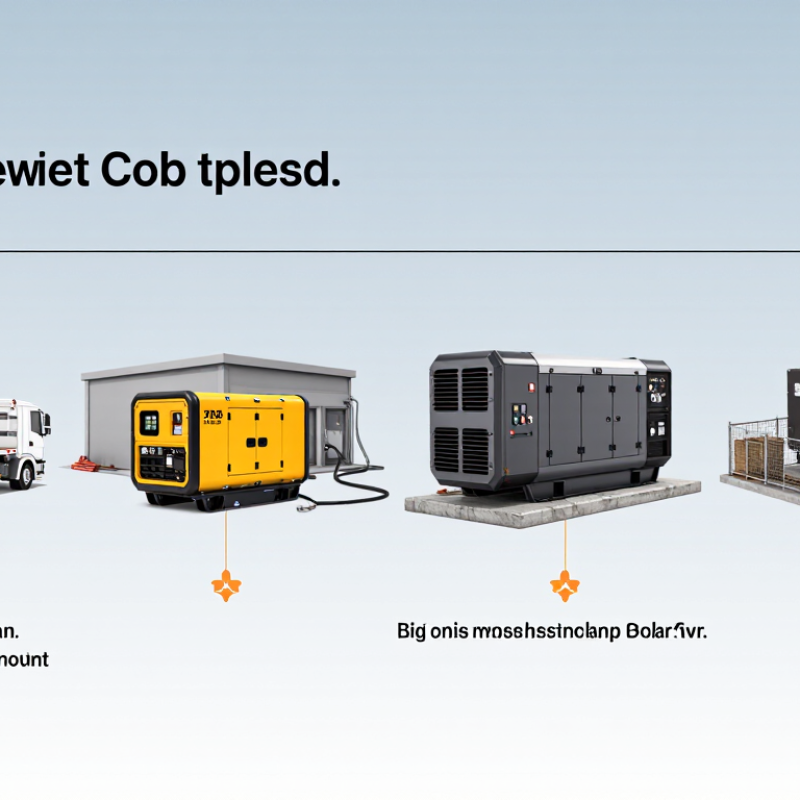
Portable diesel generators are useful when power needs to move with the work. Construction crews may shift one between locations, while event teams use them for temporary lighting, sound equipment, or food service. At a repair site, a wheeled unit can supply tools where grid connections are unavailable. That matters. But “portable” does not always mean easy to handle: larger units can be heavy, and uneven ground makes moving them awkward.
Diesel engines can run for extended periods, though actual runtime depends on load, fuel capacity, and maintenance. Estimate the starting and running wattage of every connected device before choosing a unit. Motors and compressors often draw more power when starting. It is easy to overlook that detail in a quick estimate. Allowing a reasonable capacity margin helps prevent overload without paying for far more output than needed. Plan fuel deliveries around expected use, and place the generator outdoors, away from doors and windows, to reduce exhaust exposure. Check oil, filters, cables, and protective covers before operation; small issues can become inconvenient during a long shift. Noise and vibration also deserve attention, especially near workers or temporary offices.
Standby Diesel Generators for Backup Electricity
Standby diesel generators are designed to restore electricity when the utility supply fails. They are common in hospitals, commercial buildings, data centers, and remote facilities. Their value is not simply rated output; the unit must start, accept load, and run long enough for power to return.
Uptime Institute’s 2024 Annual Outage Analysis reported that 54% of respondents’ most recent significant data-center outages cost more than $100,000. That figure is specific to data centers, but it shows why backup readiness deserves attention.
A practical setup includes an appropriately sized generator, an automatic transfer switch, safe exhaust routing, and accessible fuel storage. During an outage, the switch detects lost utility power and transfers selected circuits to the generator. Critical loads might include a server rack, refrigeration, medical equipment, or a sump pump—not every light and outlet.
Oversizing can waste fuel and create poor operating conditions; undersizing risks overload when motors start. Fuel quality and battery condition also matter, so scheduled load testing can expose problems before an emergency.
The awkward truth: a generator that rarely runs can look dependable right up to the moment it fails. Test records help, though they cannot guarantee every real-world start.
Industrial Diesel Generators for Continuous, High-Demand Use
Industrial diesel generators serve factories, mines, water plants, and other sites needing steady power for long operating hours. For continuous, high-demand use, select a generator by its continuous operating rating—not its emergency standby rating. ISO 8528-1 defines distinct generator set ratings for different operating conditions. A unit sized only for peak demand may struggle with motor-starting surges or sustained heavy loads. That margin matters.
The International Energy Agency’s Electricity 2024 report estimates data centres used about 460 TWh of electricity worldwide in 2022, with demand projected to exceed 1,000 TWh by 2026. This is not a forecast of diesel-generator use, but it illustrates growing pressure on reliable power systems. For industrial sites, engineers should assess load profiles, ambient heat, altitude, fuel storage, and cooling capacity. Fine print matters. Low-load operation can also create maintenance concerns, so actual duty cycles deserve careful review.
Tips: Log hourly loads before sizing. Check fuel filters, coolant, and exhaust systems on a set schedule. Test under load, not just at idle. Leave room for future demand; forecasts are useful, but they can be wrong.
Marine Diesel Generators for Onboard Power
Marine diesel generators provide electrical power when a vessel’s main engine is stopped or onboard demand rises. They commonly run lighting, navigation equipment, pumps, refrigeration, and battery chargers. In a compact engine room, installation details matter: secure mounting, ventilation, exhaust routing, and maintenance access all affect reliable operation. Salt spray and vibration are constant concerns. Small leaks can become serious.
Choose a generator based on realistic loads, not just peak wattage. Account for continuous use, motor-starting surges, operating hours, and the vessel’s need for backup power. A correctly sized unit can avoid frequent overload, while an oversized generator may spend too much time at light load. This trade-off is easy to miss.
Marine units may include vibration isolation, corrosion-resistant components, and seawater heat exchangers. Inspect oil, coolant, belts, filters, and the raw-water path according to the service manual. Keep fuel lines and exhaust joints accessible where practical. A tidy installation is not always a serviceable one; access deserves a second look.
Inverter Diesel Generators for Stable, Low-Noise Output
Inverter diesel generators suit sites that need steadier power and less intrusive sound. Their electronics convert generated power into a controlled output, helping protect sensitive equipment from voltage and frequency swings. Some models also vary engine speed with demand, which can reduce noise and fuel use at light loads. But performance differs. At high loads, cooling fans and exhaust can still be clearly audible.
Noise needs context. The WHO’s 2018 Environmental Noise Guidelines recommend keeping road-traffic noise below 45 dB Lnight, but this is not a generator limit. It does show why nighttime sound deserves attention. The U.S. EPA’s 2024 GHG Emission Factors Hub assigns distillate fuel oil about 10.21 kg of CO2 per U.S. gallon. Quieter operation does not automatically mean lower emissions; sensible load sizing and maintenance matter. Real sites are messier than specification sheets suggest.
Tips: Check sound ratings at a stated distance and load. Place the unit on a level, vibration-isolated surface, and keep airflow clear. Measure noise at the nearest occupied area after installation.