

2026 Top Hydraulic Pump Repair Companies How to Choose?
Choosing among the 2026 Top Hydraulic Pump Repair Companies requires more than comparing hourly rates. A pump may look clean outside, yet show scoring on its swash plate, bronze debris in the case drain, or heat-darkened oil inside. The best repair provider connects these clues with measured evidence. It should document pressure, flow, leakage, vibration, contamination levels, and final test results.
Industry data supports careful evaluation. Grand View Research’s Hydraulic Pumps Market Size, Share & Trends Analysis Report identifies expanding demand across construction, agriculture, mining, and industrial equipment. The National Fluid Power Association’s market outlook also tracks continued reliance on hydraulic systems in North America. These reports describe equipment demand, not repair quality. That distinction matters. A growing market does not guarantee competent service.
Herbert E. Merritt, author of Hydraulic Control Systems, emphasized the practical foundation of the field: “The performance of a hydraulic system depends upon the proper control of fluid flow.” His point remains valuable during repair selection. A company that replaces seals without finding the flow restriction may return the same failure to your workshop. Quickly.
This guide compares Hydraulic Pump Repair companies through technical capability, technician experience, warranty terms, testing equipment, parts traceability, turnaround time, and customer evidence. ISO 4406 cleanliness reporting, calibrated test benches, and clear failure-analysis photographs deserve attention. No shortlist is perfect. Some published claims may be difficult to verify. Readers should request service records, test sheets, and realistic delivery commitments before approving work.
What Hydraulic Pump Repair Companies Do and Why Their Services Matter
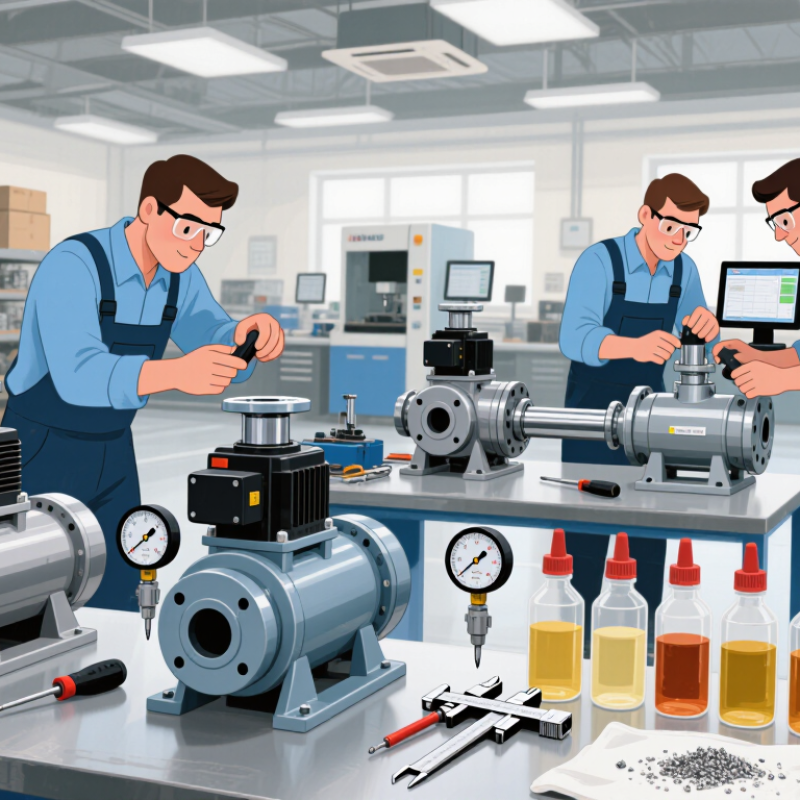
Hydraulic pump repair companies restore pumps that have lost pressure, flow, or smooth operation. Their technicians inspect the housing, shafts, bearings, seals, and internal surfaces. They also test fluid contamination and measure pressure under controlled conditions. A pump may sound normal while its efficiency is already falling.
Reliable repair work begins with evidence, not guesses. Technicians compare test results with manufacturer specifications and examine wear patterns during disassembly. They may polish a damaged surface, replace worn components, or recommend a full rebuild. After assembly, the pump should run on a test bench before returning to service. This step can reveal leaks, vibration, or unstable pressure. Repair records also help maintenance teams track recurring failures and prevent unnecessary downtime.
Tips: Ask how the company tests repaired pumps and documents results. Check whether technicians explain the failure clearly, not just the replacement cost. Request details about cleaned parts, installed components, expected performance, and warranty terms. Keep fluid samples when possible; they may expose dirt, water, or heat damage. A repair quote can still miss hidden wear. That is an uncomfortable truth. Good technicians admit uncertainty and suggest further testing when evidence is incomplete. Age, poor filtration, incorrect installation, and excessive heat can all shorten pump life, even after a careful repair.
| Evaluation Dimension | Factual Technical Reference | What a Qualified Repair Company Should Do | Why the Service Matters | Priority |
|---|---|---|---|---|
| Pump Type Coverage | Common hydraulic pump designs include external gear, internal gear, vane, radial-piston, and axial-piston pumps. | Identify the pump design, displacement, rotation direction, port configuration, control type, and application before quoting the repair. | Different pump designs require different inspection methods, replacement parts, clearances, and test procedures. | High |
| Incoming Inspection | Failure causes may include contamination, cavitation, overheating, misalignment, incorrect fluid viscosity, wear, or excessive operating pressure. | Record the pump condition, photograph damage, document the reported symptoms, and inspect the shaft, housing, bearings, seals, rotating group, and control components. | Finding the root cause helps prevent a repeat failure after the rebuilt pump is returned to service. | High |
| Dimensional Measurement | Critical components such as shafts, bushings, pistons, valve plates, bearings, and cylinder blocks operate with controlled clearances specified by the design or service documentation. | Use calibrated measuring equipment to check wear, runout, flatness, surface damage, and component dimensions against applicable technical specifications. | Visual inspection alone may miss dimensional wear that causes internal leakage, low pressure, heat generation, and poor efficiency. | High |
| Parts and Materials | Seals, bearings, wear plates, valve plates, pistons, springs, and other components must be compatible with the hydraulic fluid, pressure, temperature, and pump design. | Provide a clear parts list identifying reused, reconditioned, replaced, or customer-supplied components, together with material and compatibility information where relevant. | Incorrect materials or poor-quality replacement parts can shorten service life and cause leakage or premature failure. | High |
| Contamination Control | ISO 4406 expresses hydraulic-fluid cleanliness using a three-number particle-count code for particles greater than 4, 6, and 14 micrometres. | Clean components, protect open ports, use filtered test fluid, and recommend a cleanliness target appropriate to the hydraulic system and pump manufacturer’s requirements. | Solid particles accelerate wear, damage precision surfaces, block small orifices, and can contaminate a rebuilt pump during installation or testing. | High |
| Repair and Reconditioning | Repair scope can range from seal replacement and surface reconditioning to replacement of damaged rotating groups, bearings, housings, or control assemblies. | Separate repairable parts from non-repairable parts, explain the proposed scope before work begins, and use controlled assembly and torque procedures. | A documented repair scope improves cost control and reduces the risk of returning an unsafe or unreliable pump to operation. | High |
| Test-Bench Capability | A functional hydraulic-pump test normally evaluates pressure, flow, speed, leakage, temperature, noise, and control response as applicable to the pump design. | Test the repaired pump under representative operating conditions and record test readings, fluid condition, test speed, pressure, flow, and acceptance criteria. | Testing verifies performance before installation and can identify internal leakage, unstable controls, abnormal noise, or overheating. | High |
| Performance Verification | Hydraulic power is related to pressure and flow; pump efficiency is affected by internal leakage, mechanical losses, fluid viscosity, speed, and temperature. | Compare measured pressure and flow with the applicable pump specifications rather than relying only on a visual inspection or no-load test. | A pump that rotates correctly may still fail to deliver the required flow or pressure under load. | High |
| Root-Cause Analysis | Repeated pump failures are often associated with system-level issues such as blocked filters, restricted inlet lines, air ingress, excessive heat, contamination, or incorrect relief-valve settings. | Review the reservoir, suction line, filtration, fluid level, relief settings, coupling alignment, operating temperature, and installation conditions. | Repairing only the pump may not solve the underlying system problem and can lead to another failure soon after installation. | High |
| Documentation and Traceability | Useful repair records include inspection findings, measurements, replaced parts, test results, calibration status, and final acceptance information. | Supply a repair report with serial or job identification, photographs where useful, test data, parts information, and recommendations for installation and commissioning. | Traceable documentation supports maintenance planning, warranty evaluation, audits, and future troubleshooting. | Medium |
| Calibration and Quality Controls | Pressure, flow, speed, temperature, and dimensional instruments can introduce measurement errors if they are not maintained and calibrated. | Maintain calibration records for test-bench instruments and use repeatable inspection and assembly procedures. | Reliable measurements are necessary to distinguish a successful repair from a pump that merely appears operational. | High |
| Warranty Terms | A repair warranty normally defines the covered workmanship or parts, duration, exclusions, required installation conditions, and claim process. | Provide written warranty terms that clearly state coverage, exclusions, customer responsibilities, and the evidence required for a claim. | Clear terms reduce disputes and help the buyer compare repair proposals on more than price alone. | Medium |
| Turnaround Planning | Repair time depends on pump size, damage severity, parts availability, machining requirements, testing capacity, and approval time. | Give separate estimates for inspection, quotation approval, parts procurement, machining, assembly, testing, and shipment. | A stage-by-stage schedule is more useful than an unqualified delivery promise and supports production planning. | Medium |
| Installation Support | Correct installation includes clean hydraulic fluid, suitable filtration, proper shaft alignment, correct rotation, adequate inlet conditions, and air-free priming where required. | Provide commissioning instructions covering flushing, fluid level, inlet restrictions, rotation checks, start-up procedure, and post-installation monitoring. | Many rebuilt-pump failures occur during installation or commissioning rather than during the workshop repair itself. | High |
| Total Cost of Ownership | The lowest initial repair price does not necessarily represent the lowest operating cost; downtime, repeat failures, energy losses, contamination, and emergency replacement can be more expensive. | Compare the repair scope, test evidence, warranty, expected service life, lead time, technical support, and preventive recommendations together with the quoted price. | A broader evaluation helps select a service provider that reduces downtime and lifecycle risk. | High |
Related Posts
-
The Next Generation of Hydraulic Pump Motors Innovation and Impact
-
How to Choose the Best Pump Parts for Optimal Efficiency and Longevity in Your Operations
-
Exploring the Unique Features and Applications of the Best Hyd Pumps: An In-Depth Look at Alternative Types
-

Exploring Innovative Alternatives to Traditional Hydraulic Pumps and Motors for Global Buyers
-
Revolutionizing Industrial Efficiency with Advanced Hydraulic Drives in Global Markets
-
Unlocking the Benefits of Hydraulic Drives: A Global Sourcing Guide